A memorial?
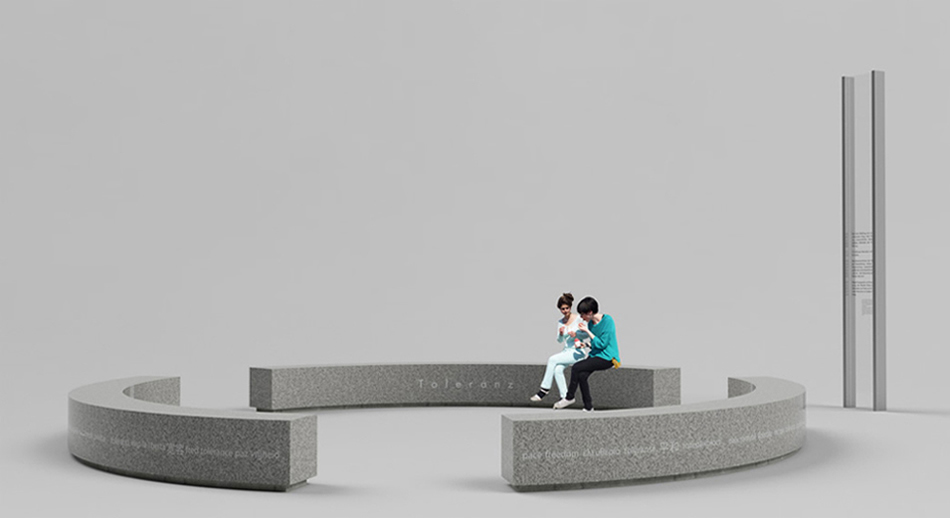
Digitally generated image of the project © VG Bildkunst

Single circular segment made of light grey granite with engravings, Length of one segment: 163 cm, height: 40 cm
Denk-Ort Projekt Pinneberg
The image shows one of a total of nine segments, arranged in a circle in three groups of three segments each.
The terms peace, freedom, and tolerance are engraved on the outer surfaces in 26 languages in no particular order. Depending on the position of the sun, different sections of the surrounding inscription become visible throughout the day due to the lateral incidence of light.The computer simulation at the top illustrates the entire project. Next to the circularly arranged segments, a glass stele is installed, containing a text commenting on the Nazi stele opposite, which is not shown here.
The glass stele is designed to proportionally overlap the Nazi structure when viewers occupy a specific vantage point.
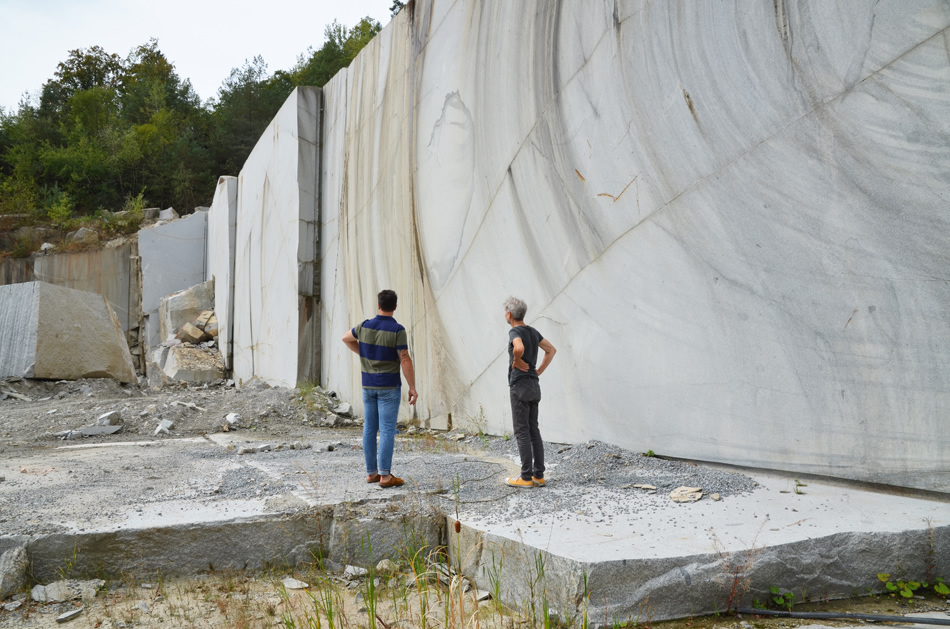
Daniel Braun of Kusser Granit and F. Jörg Haberland in the quarry
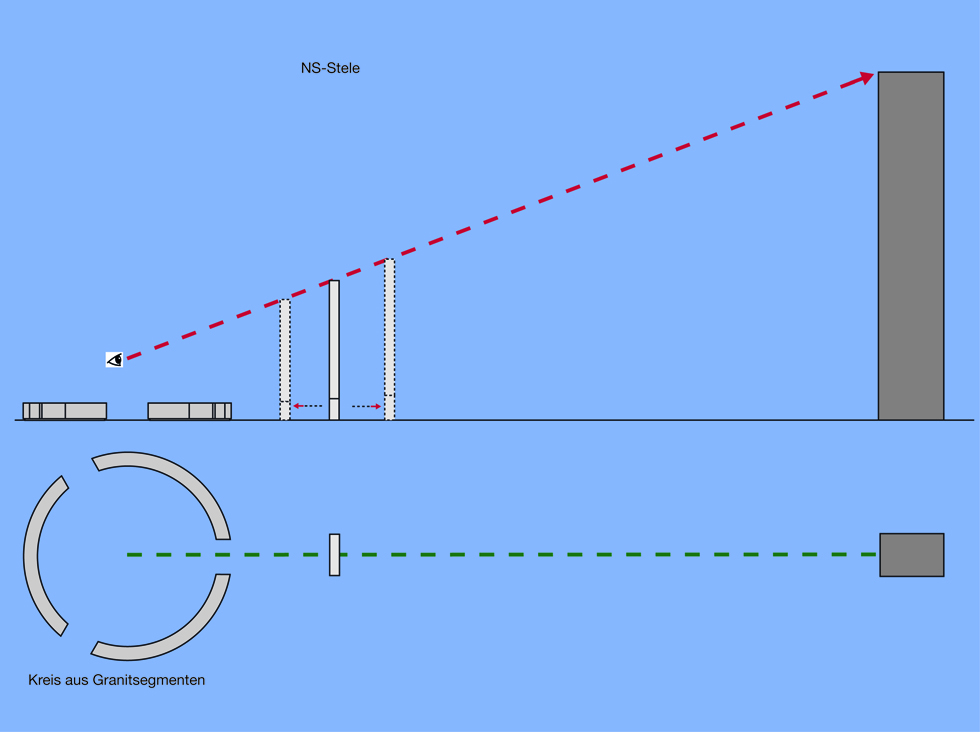
Schematic illustration of the line of sight from the circle to the NS stele on the far right, shown in a side view and a top view
The Denk-Ort is conceived as an artistic commentary that transforms the rigid symbolism of a listed Nazi-era structure into an open, future-oriented form of remembrance.
While the stone stele of the historic structure embodies power asymmetries, hierarchy, and ideological closure, the newly created space foregrounds accessibility, plurality of voices, and reflection.
At its centre is a circular granite structure, six metres in diameter. Its form counters the stele’s vertical dominance. The circle is low, walkable, and connective. Rather than inviting viewers to look up, it encourages them to pause, linger, and engage in dialogue on equal terms.
The words Peace, Freedom, and Tolerance are engraved into its surface. Deliberately simple in their choice, these terms nonetheless articulate a universal ethical foundation.
Along the outer faces, the words are repeated in a continuous band in 26 languages, extending their meaning into a global perspective. Depending on the position of the sun, these terms become more or less legible.
This shifting visibility is integral to a reconceptualisation of how art in public space might, in the future, engage with an evolving culture of remembrance and commemoration.